Wednesday, December 21, 2011

Religion: Taoism

     Taoism originated in China in 550 B.C. Today it has approximately twenty million followers, most of them being from Chinese descent. It is based on the teachings of Tao Te Ching. Taoists follow the views of Pantheism, saying that nature is identical to god. They also believe in yin-yang, meaning that opposites depend on each other in the natural world, and how they set each other in balance. They try to establish harmony with the Tao which is the mechanism of everything that exists. Their purpose in life is to achieve inner harmony, peace, and longevity. They achieve this living according to the Tao. Taoists are generally happy, peaceful people. After they die they believe they go into a state of non-being. Their general attitude is detached. They aim to not stress. They tend to "go with the flow" of the Tao. Tai-chi, acupuncture, and alchemy is practiced to help longevity. They have two texts they use: the Tao Te Ching and the Chuang-Tzu

The Chinese character for Tao


Friday, December 16, 2011

WAC: Claudius

     I was considered the least likely to ever be a great ruler. They all described me as awkward, clumsy, even disfigured, but that didn't stop me, Claudius Drusus Nero Germanicus, from becoming a great Roman Emperor. I started my reign in 41 A.D. and ended it in 54 A.D., but I'll save that for later. I had a hard life growing up. However, my time as emperor proved quite successful to say so myself. My end was just as eventful, before that dreaded Nero betrayed me.
      I was the black sheep in my family. Born in 10 B.C. I was left disfigured by a serious illness. Being the clutz I was didn't help either. My own uncle Tiberius was ashamed and never thought I could be ruler, for my speech impediment and limp were pretty bad. I was made fun of all the time. I even got thrown food at me during dinner. The absolute worse was when I'd stretch and rub my eyes only to find slippers on my hands, burning my eyes.
     Everything changed when my uncle's successor Caligula was assasinated. I was terrified of being thought of as emperor.  I decided to hide, for that's what I have done my entire life. The palace soldiers did indeed find me, however, and placed me as ruler. Reluctant, I accepted the position. But hey, I had good reason: like my predecessors, I could be killed anytime. Supported mainly by soldiers and courtiers, I had a rocky relationship with the Senate. Many senators supported many of the plots against my life.
     I had many highlights during my reign. For example, conquering Britain was a great achievements of mine. Not even Caesar could accomplish that! I also captured Mauretania, Thrace, and Lycia, expanded the Empire a little more. I worked hard to improve the judicial system in Rome and improved slave and women's rights and privileges. It all paid off, for I was well respected and quite popular.
      Now that I think about it, my downfall was my, well, nicely put, simply awful taste in women. I absolutely adored my first wife, Messalina. She was unfaithful though, but I tried to ignore her affairs with servants. It became too much in 48 A.D. when she was tied to Gaius Silius. That was the last straw. Silius was killed, but all I could do when I heard of my wife's "sudden" death was to sip more wine. A year later I made the grave mistake of marrying my niece Agrippina. She was a sly, evil women who used me to make her son Nero emperor. I was even convinced by her to disown my own son Britannicus.With Nero as the next heir it was only time until she attacked me.
    Her first attempt to my demise was poisoned mushrooms delivered by an unfaithful servant of mine in 54 A.D. But Ha! I slowly recovered from the attempted murder. Only then did my doctor come in to help me vomit up the rest of the mushrooms. I allowed him to use a feather down my throat, unaware of its poison tip. I was dead. Nero became emperor. Doesn't seem very fair, does it?

Tuesday, December 6, 2011

Christmas Blog Facts Notes

Equador (Eric)-
1.) Always put two large dolls under their Christmas trees.
2.) Tours of their houses are given during the holidays, usually nine days before Christmas.
3.) Children place their gift lists into an old shoe and wait for Papa Noel to visit.

Egypt (Tyler)-
1.) Christmas is celebrated on the 7th of January.

2.) All churches and Christmas homes are decorated by having lights, trees, and small mangers around.
3.) To celebrate, they all go out for Christmas to parks, cinemas, and theaters.

Russia (Dylan)-
1.) It is an offical holiday in Russia thanks to the Russian Orthodox Church.
2.) Christmas is typically celebrated on January 7th.
3.) Previously it was celebrated on December 25th.

China (Kristen)-
1.) They call Santa Claus Dun Che Lao Ren
2.) Only 1% of China's population is Christian, so it is hardly celebrated.
3.)  Christmas is not a major holiday in China.

El Salvador (Taylor)-
1.) Houses, hotels, streets, and restuarants are lit up in various colors for Christmas.
2.) After the Christmas dinner and the relatives are about to leave it is tradition to place a baby Jesus figure under the Christmas tree.
3.) The rich donate a lot of money during the holiday season.

India (Haley)-
1.) They use mangos and bananas for decorations.
2.) They sacrifice a goat to represent freedom and holiness.

3.) Two hour ceremonies are held at the churches.

Russia (Amber)-
1.) Christmas is called the Festival of Winter.
2.) Fasting occurs up to 39 days, usually until Jnauary 6th on Christmas Eve.
3.) Hyms and carols are sung.

Japan (Madori)-
1.) They make a traditional Japanese Christmas cake.
2.) They have smaller Christmas trees.
3.) They go out and buy their gifts, so no presents are under the tree.

France (Shania)-
1.) French children put their shoes in front of fireplaces so they will be filled with gifts.
2.) They have a culinary celebration called le Reveillon.
3.) After Christmas a yule log made of Cherry wood is burned all night.

Madagascar (Samantha)-
1.) Common decorations include holly, robins, and snow, even though none of these exist in Madagascar,
2.) Most people go to church on Christmas Eve.
3.) Families like to eat dinner and dress up in their best clothes.
Italy (Keeley)-
1.) Christmas in Italy is celebrated from December 24th to January 6th.
2.) Traditionally a meatless dinner is eaten on Christmas Eve with your family.
3.) In Italy, presents are brought by La Befana who arrives in the night to fill children's stockings.

Peru (Katara)-
1.) Christmas is celbrated as Nocha Buena on December 24th.
2.) Parties are thrown by the adults after midnight until 6:00 A.M.
3.) They celebrate with religious symbols such as the Retablos or nativity scenes.

Canada (Paige)-
1.) Songs and carols brought from Brtitain two centuries ago are sung each Christmas morning.
2.) Like Americans, Canadians also celebrate with cards, carols, trees, lights, and more.
3.) They display nativity scenes in their homes.

Germany (Raychel)-
1.) Santa Clause doesn't arrive at Christmas.
2.) The German Christmas starts the first day of Advent.
3.) The children hang a show in the fireplace: if children are good the shoes are filled with candies, if they were bad the boots are filled with twigs.

Tuesday, November 29, 2011

You are Cordially Invited~

~For a Roman Dinner Party~
Theme: Wonderland-esque 'Tea Party' please dress accordingly.

Guest list includes the following worthy:
1.) Pomponia Suder
2.) Appia Elmore
3.) Quinta Ware
4.) Albina Truman
5.) Decima Strawder
6.) Publius Poling
7.) Servius Stuart
8.) Sextus Terwilliger
9.) Spartacus Scott
10.) Horatia Kyle

And the seating arrangement is ordered the following way:

The 7-course meal being served at this occasion will be served as following:
1st course:  Gustatio: Olives, lentils, mallows, broccoli, asparagus, artichokes, leeks, carrots, turnips, parsnips, beets, peas, green beans, radishescauliflower, onions, cucumbers, fennel, and capers served on Roman lettuce and other field greens drizzled with vinegar and salt.
2nd corse: Stewed and salted nails with truffle mushrooms and onions.
3rd course: Light cucumber soup lightly salted with parsley added. Served with wheat bread.
4th course: Pigs' ears marianated with garum on top of various fruits (grapes, figs) and cabbage.
5th course: Mullus covered in garum topped with parsley, lentils, radishes, and lemon slices.
6th course: Citrus platter including lemon and lime sherbet, sliced fruits served in water.
7th and final course: Wheat cakes drizzled with honey and covered in hazlenuts, walnuts, and almonds. Served with a variety of fruits such as figs, peaches, dates, and apples.
Watered-down, spiced wine will be served with all meals. Wine-like tea will also be served to keep in touch with the theme.

Don't forget to RSVP


Thursday, November 17, 2011

School System in Morocco

     In Morocco children can enter schooling at the age of four. This is optional, for it is only pre-school education. The primary education consists of children ages six to twelve years old for six years. Students are required to pass Certificate d’etudes primaries to be eligible for admission in lower secondary schools.
    Once this is passed, students spend three years in lower-middle school. After nine years’ basic education, students enter general secondary education where they are offered three options: letters, sciences, or mathematics. Upon completion, they are awarded the Baccalaureat. They may also choose a technical path, leading to the Baccalaureat technique. This is where the drop-out rate is highest, and the gender rates contrast more significantly. 
     From ages fifteen to eighteen students attend tertiary education. This system consists of both private and public institutes. There are fourteen public universities in Morocco, in addition to a large number of private universities. The enrollment rate at this level is only 11%. Admission to public universities requires only a bachelor’s degree, whereas admission to other higher public education, such as engineering school require competitive special tests and special training before the exams. At all levels the basic requirement is a good knowledge of Arabic or French.
     Schooling in Morocco is quite similar to schooling in the United States, for both have three levels of education with similar age and gender rates. Also, a type of diploma is obtained once graduating the final level, with alike academic courses taken to pass. Private and public education is offered in both countries too. A signifigance difference in the two systems is the lack of extra curricular activities in Morocco. They are quite limited in the arts and sports, and focus more in the technical field.
      A typical school day in Morocco is 5.5 hours in the 1st and 2nd grade, increasing ever second year until the 9th grade, when it reaches seven hours a day. Arabic is the main language during the first two years. French is introduced in the 3rd grade, and then taught with more hours a week than Arabic. At the ‘high school’ level, basic literature, science, mathematics, history, and technical studies is taught throughout each day. Most students have dropped out by this point, so attending high school in Morocco is a great accomplishment.


Tuesday, November 15, 2011

Christmas in Morocco


Moroccan Qatayef (Arabian pancakes) Recipe:
Ingredients:
·         **To Make the Pancakes**
·         1/2 teaspoon instant active dry yeast
·         1 teaspoon granulated sugar
·         1 1/4 cups warm water (110 degrees F)
·         1 1/2 cups all purpose flour (wheat flour can also be used)
·         1/8 teaspoon salt
·         **For the Filling**
·         1 cup walnuts, chopped
·         2 tablespoons sugar
·         1 tablespoon orange blossom water (optional)
·         **For the Syrup**
·         2 cups granulated sugar
·         1 3/4 cups light corn syrup
·         1/4 cup orange blossom or rose water
·         1/3 cup warm water
Preparation:
Dissolve yeast and sugar in water inside the measuring cup for 10 minutes, or until proofs (become frothy). If your yeast does not proof, it means the yeast is bad or the water was not warm enough or too hot. Remember that yeast is a live organism and needs the proper environment to work properly!

In a separate bowl, combine flour and salt. Add the proofed yeast and sugar water mixture. Combine well, cover, and allow to sit in a warm area for 30-45 minutes.

While pancake mix is proofing, prepare filling. In a small bowl, mix walnuts with sugar. Add orange blossom water if desired. Cover and set aside.

This is now a good time to prepare the syrup. In a medium saucepan, combine sugar, water, and corn syrup. Bring to a boil, add orange blossom or rose water. Stir well to prevent sticking. Reduce heat to low and allow to sit until ready to use.

Preheat griddle or frying pan to medium high heat. Using a ladle, make a five inch pancake with the batter. Once the batter begins to bubble on top, remove pancake from griddle and set aside. Do not flip, you are only cooking one side. Repeat with remaining batter.

Preheat 1 inch of oil in a frying pan to medium high heat. While oil is heating, take one 1 tablespoon of nut filling and place it on top of the uncooked side of the pancake. Fold the pancake in half, to make a half moon shape and seal edges by pressing together. Repeat with remaining pancakes and filling.

Fry on each side until a light golden brown color (about 15-30 second each side). Drain on a towel lined plate.

Drizzle syrup generously over qatayef and serve immediately.

Christmas in Morocco facts:
1.)The exact start of Ramadan (their religious holiday similar to Christmas) is often never determined until just before the holiday begins because it is determined by a sighting of the new moon.
2.) Moroccans typically celebrate Ramadan for an entire month.
3.) 
During Ramadan, observers are expected to deprive themselves from food, drink, and other pleasures from dawn to dusk. Removing these comforts from daily routine is intended to focus the mind on prayer, spirituality, and charity and to purify the body and mind.
4.) Only children, pregnant women, and the ill are exempted from this holiday.
5.) Ironically, many people gain weight during Ramadan. They are more sedentary during the daytime, eat richer food than normal at the fast-breaking meal in the evenings, and get the majority of their daily calories at night right before they go to bed.


Monday, October 24, 2011

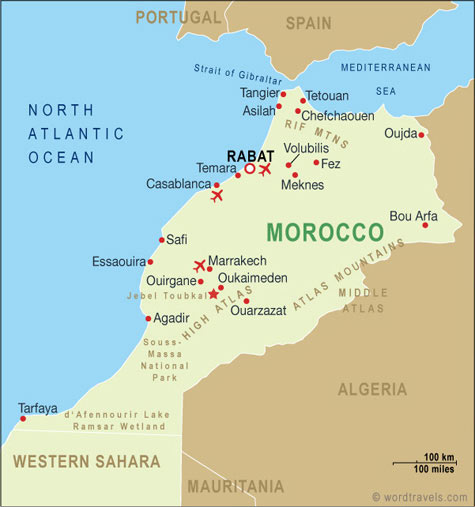
Map-Morocco

Budget-Morocco Trip

Plane fare roundrtrip: $1343.61
Total hotel cost: $643
Total food cost: $85
Cab fares: $98
Tourism/shopping expenses: $106


Total amount spent: $2,273.61 or 18579 dirham.

Day 7

     For my final day in Morocco, I wanted it to go out with a bang. I quickly left for Chefchaouen to walk to the famous blue-painted streets. I learned they were painted by the Jewish refugees in the 1930s. They are still well-maintained and painted a gorgeous sky blue color. It was enchanting to walk through. On my way through I stopped by a Henna decorator in the streets. I had my hands and feet dyed a bright blue like the walls and then had patterns draw on them. I felt silly, but it was really beautiful. Unfortunately, the dyes last 1-2 weeks, so I'd be going back home stained. What a souvenir though. My stay in Cihefchaouen was brief, for I took another taxi ride to Tangier. My first stop was through the Hercules Cave. I took the natural-made trail to the sea, which had a stunning view. I suddenly felt the need to go back into the Moroccan waters one last time before I had to leave. The winter climate brought perfect temperature down on the beach, and the waves were perfect for surfing. After mediocre lessons, I decided to attempt to get into the water. It was lovely, but I tired easily. However, the camel ride on the beach and back to my taxi cab was interesting.

 My final meal in Morocco was Moroccan chickpeas and sweet potatoes (all vegetarian yet again.) apricots and cinnamon oranges followed for desert for a cool. Despite all my eating, I do believe a few pounds were shed from all the walking through this country. I was saddened to leave, but before I knew it I was boarding the airplane back in Rabat straight to Pittsburgh, a whole day flight. I'd return on the 23rd of December, just in time to show everyone my painted feet and new slippers for Christmas. It was an eventful trip.

Day 6

Phew! I practically jumped out of the excruciatingly  long ride to Fes. 242 miles! I wanted to shake my weak legs out, so I quickly scarfed down honey croissant and various fruits with green tea. Onward I went to the Fes Festival of World Sacred Music, which has occured for 18 years every winter. I cam at the perfect time, for the weather was lovely and the music was delightful. You could dance in the streets and sacred Moroccan music was played throughout the city. Arab pop and American folk could be heard sometimes and the people talked loudly, but I enjoyed myself regardless. As the crowd carried on I noticed the close mosque not even a mile from where I was. I stolled along until I came across the Andalusian Mosque. Not as brilliant as my first visit to a mosque, but still extravagant. There was a pool in the center of it with optical illusions within it. Very entertaining and passed the time quickly. I walked back through the beautiful Fes with 300 less dirham. My last adventure of the night included venturing into the Souks. Somewhat like a market, but much more glorious. Everything looked like Aladdin, from slippers to jewelry to carpets to genie lamps; I loved it.
Some of the many "magic" carpets sold in the Souks.

 I ended up actually buying a glimmering pair of slippers for 450 dirham, my most expensive purchase yet, but I didn't care. I danced back to Le Palais de Fes, my hotel room, before sliding off my new slippers and going into a deep slumber.

Day 5

As I woke, a certain grogginess hit me. All the running and sight-seeing was certainly taking its toll on me. I decided to travel even farther south to Marrakesh, where I heard the Medina was very healing. After another long taxi ride and fares, I arrived and headed straight for the Hamman Spa. The building was gorgeous, and I didn't even mind the publicness of it all. The hour massage was wonderful and I felt completely rejuvienated afterwards. All the ladies were friendly, but didn't speak much English and my French is poor, so we all smiled and continued on. After that, I decided to grab breakfast. Melon and orange slices with Bissara. Split peas weren't the best choice today, but I enjoyed the relatively cheap food. A calming walk through the Majorelle Gardens soothed my stomach. Afterwards I hit the Djamaa El Fna Square, where I enjoyed snake charmers, story tellers, and even monkey handlers. I paid each 200 dirham. After my fun day, I found another hotel for 250 dirham and settled for my long trip tomorrow.
Beautiful foliage in the Majorelle Gardens

Day 4

Safi, Morocco was my destination as I traveled the 3 hour driving distance. I wanted to work out my restless legs from the ride, so I visited the Kechla, which thrived with culture. The Kechla was a prison until 1990, so it was now open to tourists like me. I unpacked my camera and started snapshotting the many pottery and other ceramics the inmates created back when it was still used. Inspired by the pottery, I soon left the Kechla and walked through the colored streets and into the rolling hills to the Collines des Potiers-also called the potters' quaters. There I was allowed to create my choice of mosaic or tiles. I choice a small plate and decorated a mosaic. Not a beatiful masterpiece like the Moroccans made, but I was proud of it and carefully placed into my bag.
Plates, tiles, and pottery made in Safi. Much prettier than mine.

 The experience left me with dirty hands and short 165 dirham (about 20 dollars.) I cleaned off and continued on. On the menu for lunch was a traditional Harira soup, minus the lamb of course and vermicelli pasta with vegetable consomme. Very different. I finished my day by shopping around the street markets by the Agadir. I ended up buying a few handmade shirts, which were very cheap, around $5 each (Steal!) Night came quickly and I found a small hotel- Golden Tulip Farah Safi Hotel- to rest in for tomorrow's activities.

Day 3

I packed my bags first thing in the morning and headed for Casablanca. It was about an hour drive by small taxi. I paid the 250 dirham fee, then continued through the glorious city for attractions. I was most interested in sight-seeing, and this popular tourist city offered tons of it. I was in the middle of the city, so I headed for the Hassen II Mosque. From the tourist information, this monument was a major highlight in Casablanca, and as arrived near it, I could see why. It was massive. It could possibly have been the largest mosque (I quickly learned that mosques were Muslim places of worship, kind of like churches, but so much more beautiful.) in Africa. Since I was not a Muslim myself, I could only enter on a guided tour. With my luck and terrible timing, none were going on. I could only admire the beautiful mosque from outside, but I quickly picked up a pamplet to read about its history later. I scurried along and since I was already near the shore, the lighthouse in the distance sparked my interest. It turned out to be the El Hank Lighthouse. I was so attracted to Morocco's lovely beaches, so I had to take a view from the top. I soon regretted this idea, for the lighthouse was 45 meters high, and there was quite a few steps to climb. The view from the balcony was worth it though. Oh, how gorgeous Casablanca was! I finished gazing out of of the blue waters and headed towards my next destination as my stomach started to rumble. Good thing my next location was at a bar! Yep, I entered the Casablanca Bar as the pianst just sat down. I ordered a non-alcoholic pina colada and Chili Con Carne (vegetarian of course) for a rough $24. After enjoying my meal, I sat back and enjoyed the cozy atmosphere and show. The evening ended nicely as I exited the bar, and I entered my quiet motel for the night.
The old-time saloon that resembled the movie where I enjoyed my evening.


Thursday, October 20, 2011

Day 2

I started my morning by immediately sightseeing and looking for activities to do. I decided to take it easy today, for I was still fatigued from such long flights. A small cafĂ© in Oudaia caught my eye, so I went inside and ordered traditional Moroccan tea and fresh fruit for 41 dirham. It was an odd  concoction, but sitting outside was nice. The winter here had such a nice climate with warm weather and a beautiful beach in my view. I ended up taking a nice stroll along the coast and even enjoying a small swim when the sun came out. After swimming for the first time in the blue Moroccan waters, I headed for the Oudaia Kasbah, a beautiful historical building. 
Traditional decoration inside the Oudaia Kasbah. Very beautiful place.
There were few tourists, but the guide was nice and the lookout view from its windows was stunning. My next stop was Chellah, which contained many ancient ruins and cemeteries. It was free to look about, and it was very historical. I learned a lot about Morocco's culture from my day of touring. After my relatively calm and quiet day, I headed back to the hotel for another night, hoping that tomorrow promised even more.

Day 1-Morocco


Morocco awaited as I boarded yet another plane in Paris.This was my second layover, the first had been in New York. I had initially started my trip in the Pittsburgh International Airport, and was now finally headed straight towards my destination, Rabat, Morocco. I watched the sky darken from the window seat of my comfortable chair. It was worth the nice class and airline, for such expensive tickets. I paid $1,343 for round-trip, but for only one person! I made up for it with the quaint hotel I found for only 443 dirham (about $54 U.S. dollars) per night. I arrived into Rabat late in the night on December 15th, but the streets were still lively and beautiful.
I went straight to bed at the Hotel Rabat International, trying to sleep off the jet-lag. I planned to explore the attractions in Rabat the next morning, so I didn’t want to be tired. It was going to be an eventful trip.

Tuesday, October 11, 2011

M’hencha - Morocco Recipe

Also known as the Almond Snake, it's a traditional and tasty Moroccan dessert.

Ingredients:

Filling:
  • 2 cups ground almonds
  • 1 cup powdered sugar
  • 2 tsp cinnamon powder
  • approx 2 tbs orange blossom water (or enough to make a paste)-artificial vanilla may be substituted.
Pastry:
  • 1/2 strudel dough recipe or 1/2 pound phyllo pastry
  • 1/4 cup butter, melted
  • egg wash for glazing (beat 1 egg yolk with 1 tbs water)
Directions:
  1. Mix all the filling ingredients and work into a paste with your hands.
  2. Roll out strudel dough thinly and cut into 3 inch wide strips (whatever length you can handle).
  3. Brush one strip with melted butter. Take lumps of the almond paste and roll into fingers about 3/4 inch thick.
  4. Place end to end in a line along the long edge of the dough strip.  Roll the dough sheet over the filling, tucking the ends in to stop the filling from oozing out.
  5. Lift the roll carefully with both hands and place in the middle of baking sheet lined with parchment paper. Very gently curve the roll like a coil without tearing the dough. Repeat with the rest of the strips.
  6. Brush the top of pastry with egg wash and sprinkle with some ground almonds. Bake in preheated 350F oven for 30 – 40 minutes  until crisp and lightly browned.
  7. Serve at room temperature. Sprinkle with cinnamon and powdered sugar if desired.  Cut the pastry like a cake which will give you a piece with varying sizes.

    Ta-daaaa. Serve and Enjoy. 

Tuesday, October 4, 2011

Witness Account-Francis Scott Key

I solemnly gazed out into the night yet again from the ship I was detained on until morning. The battle raged as I watched helplessly while the sky lit up from the rockets being shot back and forth. Slowly the night crawled on as I paced along the side of the “Surprise,” hoping that the billowing smoke would fade soon. It has just been over a day I had been trapped alongside my negotiation party at Fort McHenry, and dawn was surely to be approaching soon.


   Then, just as the thought occurred, the first signs of dawn breaking emerged. I excitedly peered again through the smoke as it began to slowly clear across the Chesapeake Bay. I stared out into the distance looking for any sign of who had just won the battle. That’s when I saw it-an enormous flag flying proudly in the distance. It gleamed across the morning’s first rays. It was the American flag, our flag. It stood tall through the entire bombing and yet survived the perilous fight. Pride swelled through me. Deeply inspired, I hastily grabbed a letter and turned it over. Feverishly I became to write as I heard the faint, triumphant cries and cheers from the Baltimore shore.
Original written copy of the Star-Spangled Banner from Francis Scott Key.


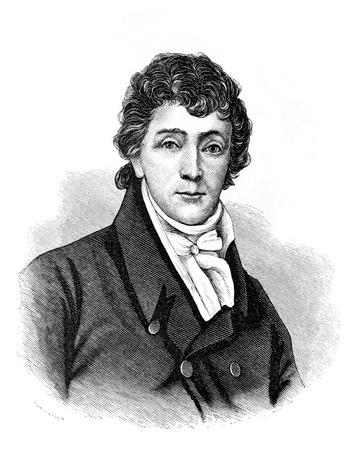
Francis Scott Key

Francis Scott Key was born on August 1, 1779 at his family plantation Terra Rubra in what is now Carroll County, Maryland. He is the son of  Ann Phoebe Penn Dagworthy and John Ross Key. He was a lawyer, author, and amateur poet. He is famously known as the author of our national anthem- The Star Spangled Banner. He also helped with the approval of the national motto “In God is our Trust.” (It was later changed to "In God we Trust" by law.) Francis Scott Key was a very patriotic and religious person. Later in his life, he also was associated with the American Bible Society and was an attorney for many court cases. He died at the age of 63 in 1843 from pleurisy. There are many monuments and memorials dedicated in Key's honor throughout the country.

Wednesday, September 28, 2011